
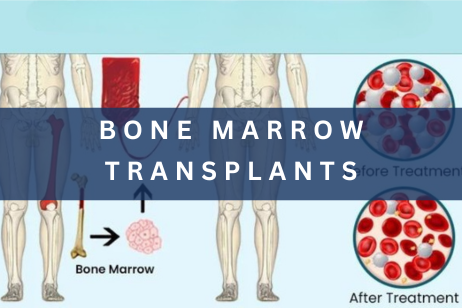
BONE MARROW TRANSPLANTS
A Bone Marrow Transplant (BMT) is a highly specialized treatment used to replace damaged or diseased bone marrow with healthy stem cells, helping restore the body's ability to produce healthy blood cells. It is often recommended for patients with leukemia, lymphoma, multiple myeloma, thalassemia, aplastic anemia, and other serious blood disorders. By rebuilding the blood and immune systems, bone marrow transplantation can offer the possibility of long-term remission, improved quality of life, and, in many cases, a potential cure for otherwise life-threatening conditions.
overview
Bone Marrow Transplant in India
Rebuilding the Body's Blood and Immune System
A Bone Marrow Transplant (BMT), also known as a Stem Cell Transplant, is one of the most advanced treatments available for patients suffering from serious blood cancers, bone marrow failure syndromes, genetic blood disorders, and immune system diseases. The procedure involves replacing unhealthy or damaged bone marrow with healthy stem cells capable of producing new blood cells and restoring normal immune function.
For many patients, a bone marrow transplant is not simply another treatment option—it represents a critical step toward recovery when conventional therapies are no longer sufficient. Advances in transplant medicine have transformed outcomes for patients with complex hematological conditions, offering renewed hope and the possibility of long-term survival.
When is a Bone Marrow Transplant Needed?
Bone marrow transplantation may be recommended when the body's natural ability to produce healthy blood cells is severely impaired or when aggressive treatments have damaged the bone marrow.
Common conditions treated through bone marrow transplantation include:
Leukemia
Lymphoma
Multiple Myeloma
Thalassemia Major
Aplastic Anemia
Myelodysplastic Syndromes (MDS)
Sickle Cell Disease
Severe Immune Deficiency Disorders
Certain Pediatric Blood Disorders
Relapsed or High-Risk Blood Cancers
Depending on the diagnosis, transplantation may be performed to eliminate diseased cells, restore healthy blood production, strengthen immune function, and reduce the risk of disease recurrence.
Types of Bone Marrow Transplants
Modern transplant programs offer several types of bone marrow transplantation based on the patient's condition and donor availability.
Autologous Transplant
In an autologous transplant, stem cells are collected from the patient's own body and preserved before intensive treatment. These cells are later reinfused to restore bone marrow function after chemotherapy.
Allogeneic Transplant
An allogeneic transplant uses stem cells obtained from a compatible donor. The donor may be a sibling, family member, or an unrelated individual with a suitable tissue match.
Haploidentical Transplant
This procedure utilizes stem cells from a partially matched family donor, expanding transplant opportunities for patients who do not have a fully matched donor.
Cord Blood Transplant
Stem cells obtained from umbilical cord blood may be used in selected cases, particularly for pediatric patients and those with limited donor options.
The Bone Marrow Transplant Journey
A successful transplant involves careful planning and coordination between multiple medical specialists.
The treatment process typically includes:
Comprehensive Evaluation
Before transplantation, patients undergo extensive testing to assess overall health, organ function, disease status, and donor compatibility.
Conditioning Therapy
High-dose chemotherapy, radiation therapy, or a combination of both is administered to destroy diseased cells and prepare the body to receive healthy stem cells.
Stem Cell Infusion
Healthy stem cells are infused into the bloodstream through a specialized intravenous line. These cells naturally travel to the bone marrow and begin producing new blood cells.
Recovery and Engraftment
Over the following weeks, the transplanted stem cells establish themselves within the bone marrow and gradually rebuild the blood and immune systems. Patients remain under close medical supervision during this critical recovery phase.
Advanced Care Beyond the Transplant
Bone marrow transplantation requires comprehensive care that extends far beyond the transplant procedure itself. Specialized transplant units provide infection control, supportive therapies, nutritional management, rehabilitation services, and continuous monitoring to ensure the best possible outcomes.
Long-term follow-up care focuses on:
Immune System Recovery
Disease Monitoring
Infection Prevention
Management of Treatment-Related Complications
Physical Rehabilitation
Psychological and Emotional Support
This multidisciplinary approach helps patients achieve a smoother recovery and improved quality of life after transplantation.
Why Choose India for Bone Marrow Transplant Treatment?
India has established itself as a leading destination for bone marrow transplantation by combining world-class medical expertise with advanced healthcare infrastructure. Leading transplant centers are equipped with modern isolation units, sophisticated diagnostic laboratories, donor matching facilities, and experienced hematology teams capable of handling highly complex cases.
Patients benefit from:
Internationally Trained Hematologists and Transplant Specialists
Advanced Stem Cell Transplant Programs
State-of-the-Art Transplant Facilities
High Success Rates Across Various Blood Disorders
Comprehensive Pediatric and Adult Transplant Services
Cost-Effective Treatment Options
Personalized Patient Care
These advantages have made India a preferred choice for patients seeking quality transplant care from around the world.
How AYUR HIND Supports Your Treatment Journey
At AYUR HIND, we understand that undergoing a bone marrow transplant can be physically, emotionally, and financially challenging for both patients and their families. Our team works closely with leading transplant hospitals and specialists across India to help patients access the most suitable treatment options based on their medical condition and individual requirements.
AYUR HIND provides comprehensive assistance including medical case review, hospital selection, specialist consultations, treatment planning, cost estimation, travel coordination, visa support, accommodation arrangements, and post-treatment follow-up services. Our goal is to simplify the medical travel process and ensure that every patient receives seamless support from the initial inquiry to recovery.
A New Beginning Through Advanced Transplant Care
For patients facing life-threatening blood disorders and complex hematological diseases, a bone marrow transplant can provide the opportunity for a healthier future. With advances in transplant technology, experienced medical teams, and comprehensive patient support, successful outcomes are becoming increasingly achievable. Through AYUR HIND, patients can access leading bone marrow transplant specialists and world-class treatment facilities in India, helping them take a significant step toward recovery, renewed health, and long-term well-being.
Expertise Area
Expertise Areas represent specialized medical fields and treatments provided by experienced doctors and healthcare professionals. These services focus on advanced diagnosis, personalized care, and effective treatment to ensure better health outcomes for patients.
- Autologous Bone Marrow Transplant
- Allogeneic Bone Marrow Transplant
- Haploidentical Transplant
- Umbilical Cord Blood Transplant
- Reduced Intensity Conditioning Transplant
- BMT for Leukemia
- BMT for Lymphoma
- BMT for Thalassemia
- BMT for Aplastic Anemia
- BMT for Sickle Cell Disease
